As the calendar turns a fresh page, looking back on 2025 at Eastern Institute of Technology, Ningbo still fills us with excitement.
2025 marks a milestone‑setting year for EIT. This year, we have collectively witnessed many moments: from the official approval in summer to the grand unveiling ceremony in winter; from the first undergraduate students’ echoing voices of reading to the lights flickering on in laboratories of the new campus. Talented individuals have gathered here from all corners of the country. Home‑minded entrepreneurs have made generous donations for education, and high‑quality papers keep rolling out.
At this moment, we select ten annual keywords to string together shining moments in talent cultivation, scientific research, social service, cultural inheritance, and international exchanges and cooperation, and reconstruct the educational journey of this young university.
Keyword 1: Approval from the Ministry of Education
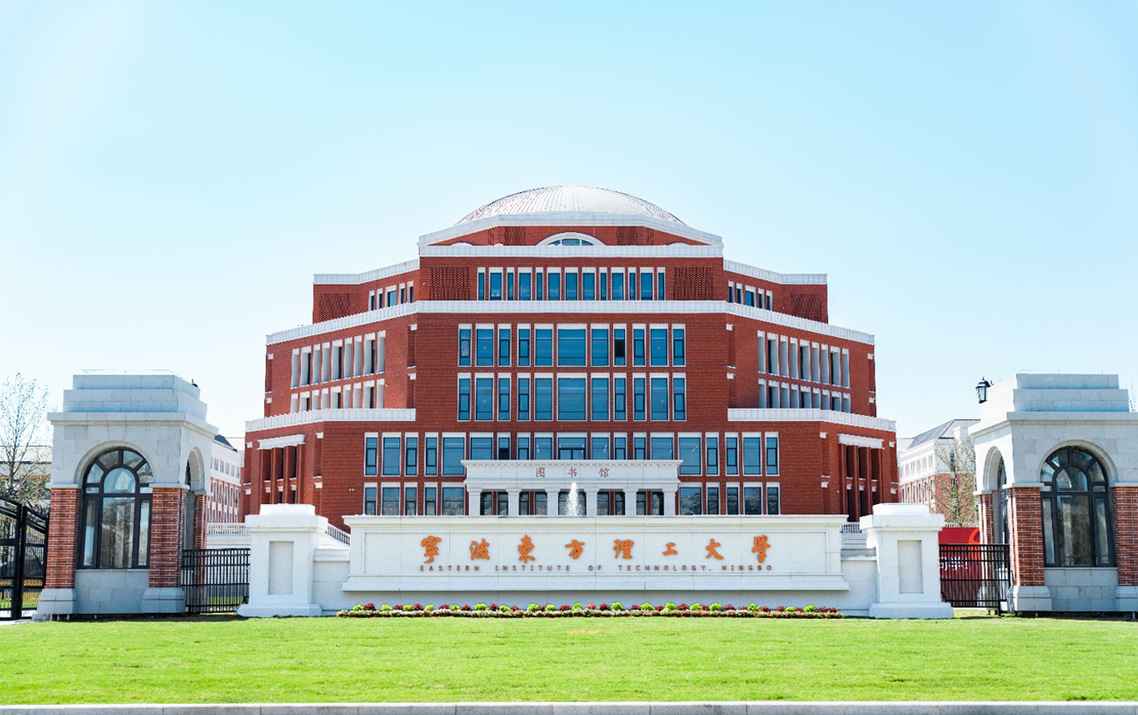
In June, the Ministry of Education approved the establishment of Eastern Institute of Technology, Ningbo. According to the Official Letter of the Ministry of Education on Approving the Establishment of Eastern Institute of Technology, Ningbo, the university is positioned as a new‑type research‑oriented university. Closely responding to national strategies and urgent needs of economic and social development, it will strengthen basic research, focus on cutting‑edge interdisciplinary studies, highlight engineering technologies, and cultivate top‑tier innovative talents.
The letter expects the university to adhere to its positioning of “high starting point, compact and refined scale, research‑orientation and internationalization”. Targeting national strategic emerging industries and future‑industry development, the university shall vigorously promote the integration of science and education as well as the integration of industry and education. It will assemble first‑class faculty, build world‑class disciplines, foster outstanding talents, generate high‑level research outputs, actively explore the operating model for new‑type research‑oriented universities, and make positive contributions to the high‑quality economic and social development of the nation and local regions.
Keyword 2: Launch of the New Campus
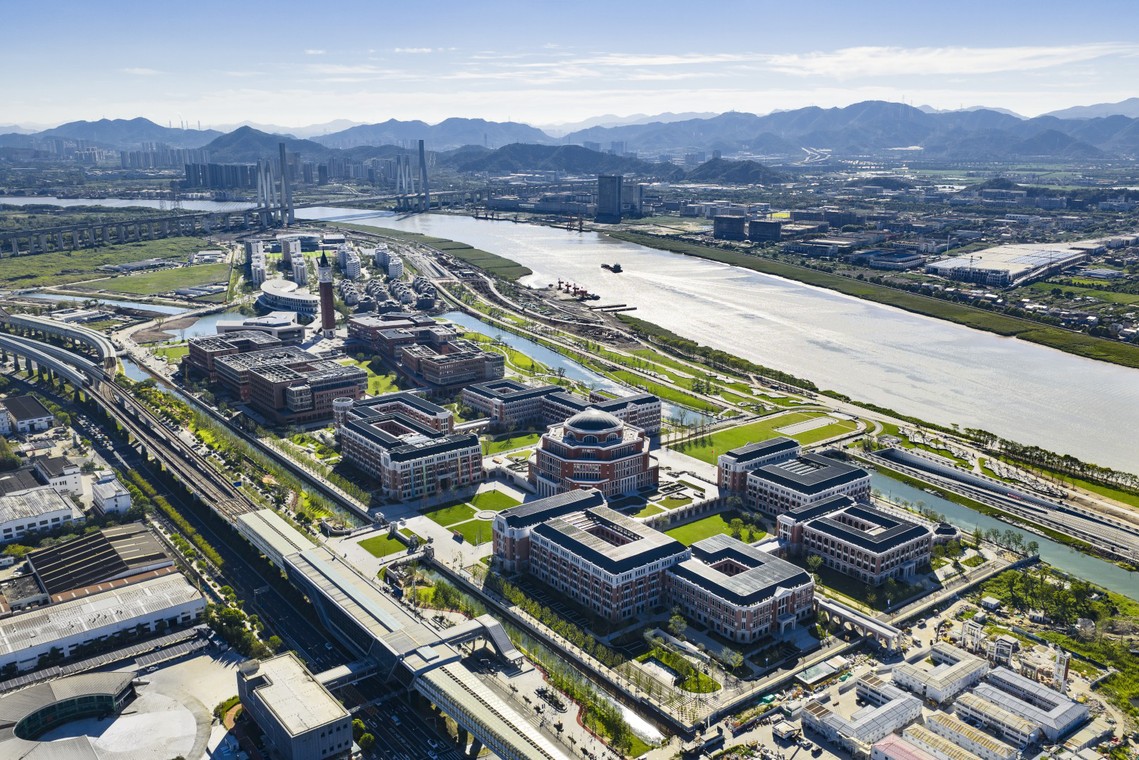
During summer and autumn, Eastern Institute of Technology officially put its permanent campus into use. Adjacent to the Yongjiang River, the first‑phase campus covers an east‑west length of approximately 3.8 kilometers with a planned total construction area of around 1.5 million square meters. Shaped like an exquisite bow‑knot, it nestles on the northern bank of the Yongjiang River.
Embracing the design philosophy of “Centennial Classics, Waterside Scroll”, the campus blends classic styles with modern elements. The towering Qiuzhen Tower echoes the library featuring the design concept of “heaven is round and earth is square”, forming the most beautiful skyline of the campus. Facing the Yongjiang River, the South Gate symbolizes the starting point from which Ningbo’s merchant groups once set sail. From here, Eastern Institute of Technology will also stride toward the world.
Scenic views unfold at every turn across the campus, which has been described as an “academic garden” integrating technology and nature. The student‑centered philosophy is reflected everywhere: the weather‑proof covered corridors connecting teaching buildings, numerous smart power sockets inside buildings, single‑occupancy student dormitory rooms and on‑site fitness facilities.
Keyword 3: Opening Ceremony
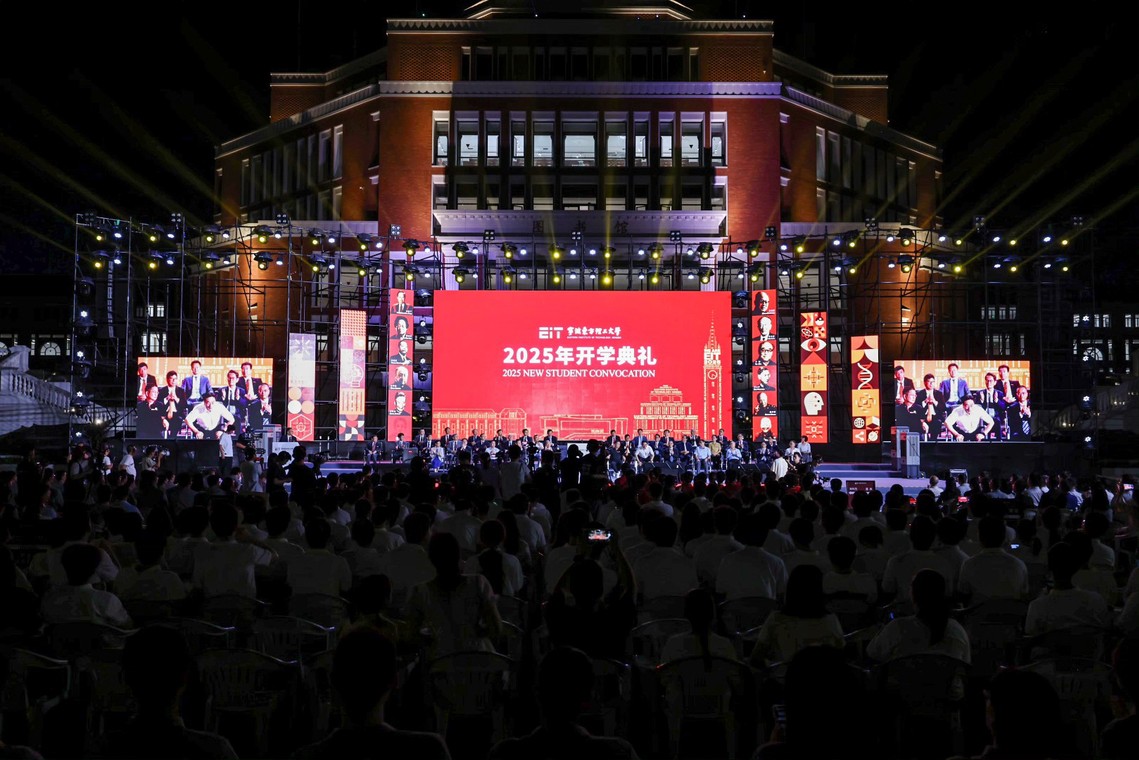
On the evening of August 30, Eastern Institute of Technology, Ningbo held its inaugural opening ceremony. It marked the university’s very‑first opening ceremony in the year when it recruited its first‑ever undergraduate students.
EIT spent merely 11 days from obtaining approval by the Ministry of Education to launching undergraduate admissions. Faced with tight schedules and heavy workloads, university staff travelled to 11 prefecture‑level regions across Zhejiang Province to conduct enrollment work. In the end, 74 undergraduate freshmen were successfully admitted with an admission score of 656. Some commented that the university had pulled off a miracle of “reaching peak performance right from the start”.
At the ceremony, Professor Shiyi Chen, President of Eastern Institute of Technology, Ningbo, delivered an address entitled Rooted in the East of the World, Exploring Boundless Possibilities. In his speech, he made special mention of Tu Youyou, China’s first Nobel laureate in Physiology or Medicine, and Mr. Renrong Yu, founding donor and Chairman of the University Council, among other distinguished Ningbo‑born scientists and entrepreneurs. He expressed the hope that students would go on to achieve outstanding accomplishments just like them.
Keyword 4: Teaching Comes First
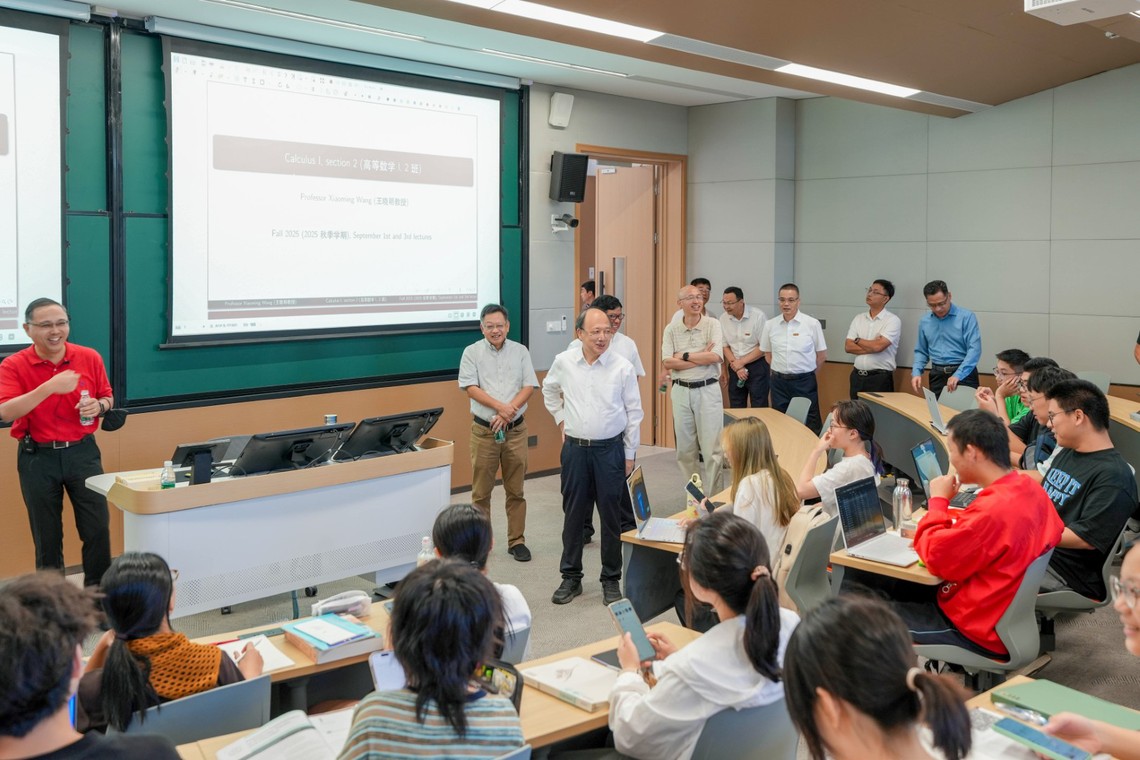
On September 1, the academic calendar for EIT’s first cohort of undergraduate students officially kicked off. Full of energy and anticipation, the students embarked on the very first chapter of their academic journey.
At Eastern Institute of Technology, teaching comes first. Delivering lectures is the primary responsibility of faculty members. Academicians and professors take to the podium, especially teaching foundational courses for freshmen — this stands as the most direct embodiment of the university’s student‑centered philosophy.
Prior to the first class of Advanced Mathematics I, university leaders including Shiyi Chen, Bo Jin and Dongxiao Zhang visited classrooms for teaching inspections of the new semester’s opening sessions.
In two parallel classrooms of the Teaching & Experiment Building, Professors Jie Shen and Xiaoming Wang guided students into the profound world of calculus.
Valuing teaching is one of EIT’s core features. Small‑class instruction is adopted for foundational subjects such as mathematics and physics. In physics lab sessions, theoretical lectures keep pace with experimental practices. English courses are offered at three proficiency levels, while physical education adopts broad‑category teaching taught by elite athletes. Senior and young faculty form teaching teams: junior instructors observe classes to jointly develop high‑quality courses. Supervision panel class audits and student teaching evaluations work together to continuously improve teaching quality.
Keyword 5: Distinguished Scholars Visiting Prestigious High Schools
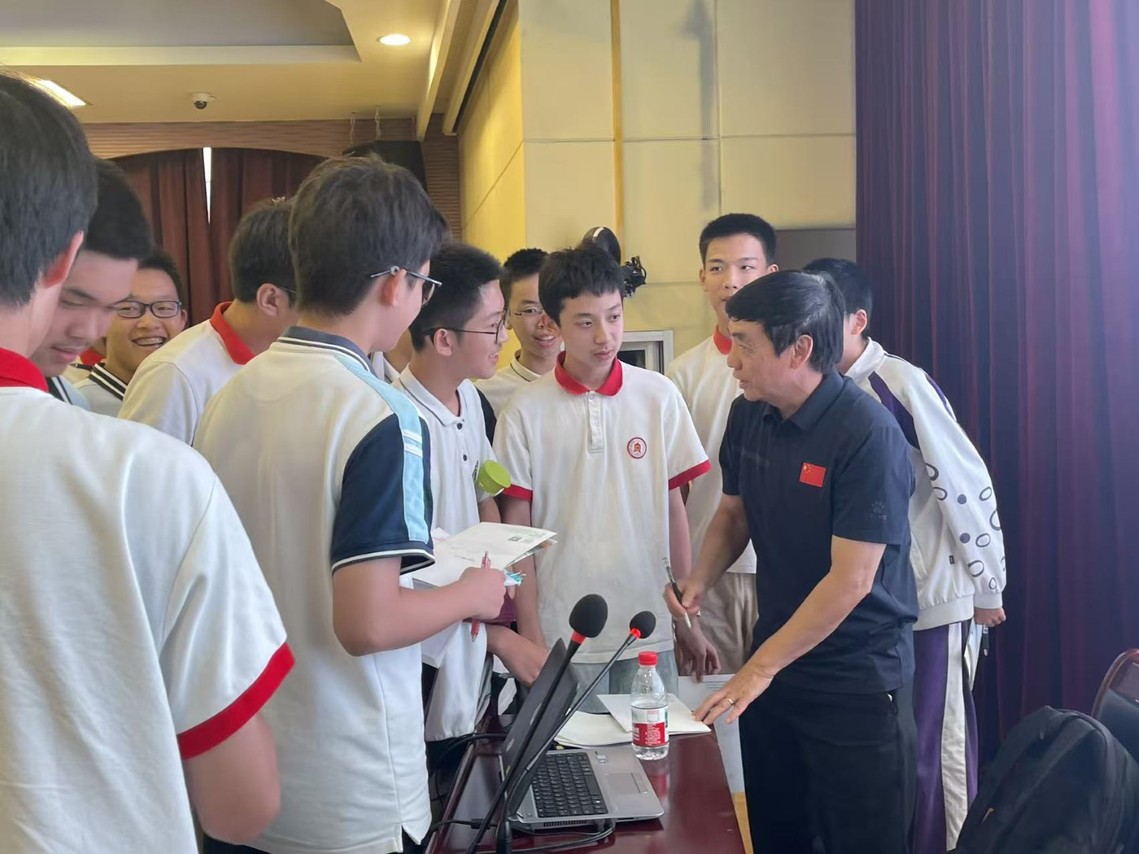
A new‑round science popularization lecture series Distinguished Scholars Visiting Prestigious High Schools kicked off in September. Boasting a star‑studded speaker panel consisting of academicians and young professors, the team combined research achievements with disciplinary charm to deliver engaging science‑popularization talks for high‑school students.
The lectures covered professional interpretations of advantageous disciplines including artificial intelligence, new materials and bioengineering, as well as sincere sharing about study‑and‑campus life and career development at Eastern Institute of Technology. The events effectively narrowed the gap between high‑school students, higher education and cutting‑edge science and technology.
From September to the end of the year, 28 lectures were held at 26 high schools including Zhenhai High School, Cixi High School, Hangzhou No.2 High School, Hangzhou Xuejun High School, Wenzhou Zhilin High School, Shaoxing No.1 High School, Jiaxing No.1 High School, Jinhua Foreign Language School, Tiantai High School and Zhoushan High School. The activities reached numerous high schools across Zhejiang cities such as Ningbo, Hangzhou, Wenzhou, Shaoxing, Huzhou, Jiaxing, Jinhua, Taizhou and Zhoushan, attracting more than 7,000 teachers and students in total.
Keyword 6: Founding Ceremony
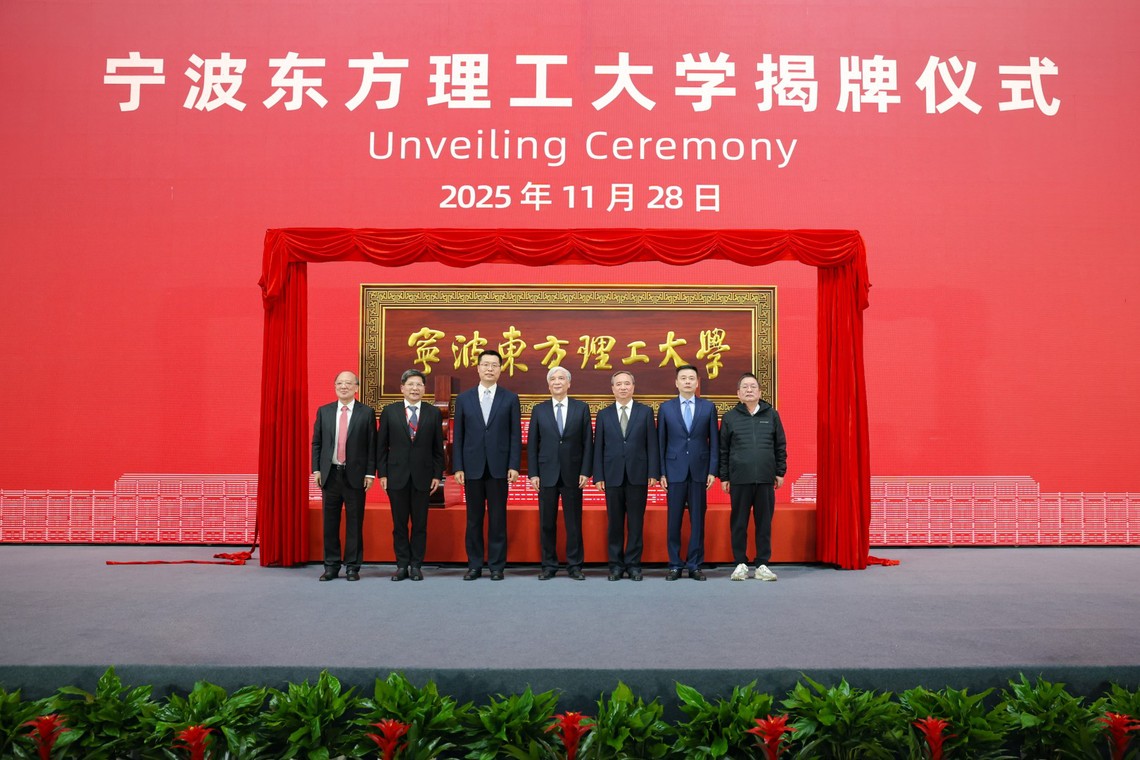
On the evening of November 28, more than 700 guests from government bodies, education, science‑technology and business circles gathered from across the country for the Founding Ceremony of Eastern Institute of Technology, Ningbo, to witness the official launch of this new‑type research‑oriented university.
Ding Zhongli, Vice‑Chairman of the Standing Committee of the National People’s Congress and Chairman of the Central Committee of the China Democratic League; Wang Cheng, Deputy Secretary of Zhejiang Provincial Party Committee and Secretary of Ningbo Municipal Party Committee; Lu Shan, Vice‑Governor of Zhejiang Province; Tang Feifan, Deputy Secretary of Ningbo Municipal Party Committee and Mayor of Ningbo; Chen Chunlei, Director of Zhejiang Provincial Department of Education; Yu Renrong, Chairman of the Board of Trustees of Eastern Institute of Technology, Ningbo; and Chen Shiyi, President of Eastern Institute of Technology, Ningbo, jointly unveiled the plaque for the university.
“Through five years of pioneering work and strenuous efforts, adhering to the Party’s overall leadership, Eastern Institute of Technology has taken firm steps to explore a distinctive development path for new‑type research‑oriented universities on China’s higher‑education landscape,” remarked Chen Shiyi in his address. Looking ahead, he expressed his hope that EIT would nurture world‑influential talents, conduct world‑changing research, and grow into a world‑class university.
Keyword 7: High‑Level Scientific Research
Adhering to the philosophy of “science‑oriented foundation, engineering‑oriented mission and integration of science and engineering”, the university achieved systematic breakthroughs in platform deployment, research tackling and original outputs in 2025.
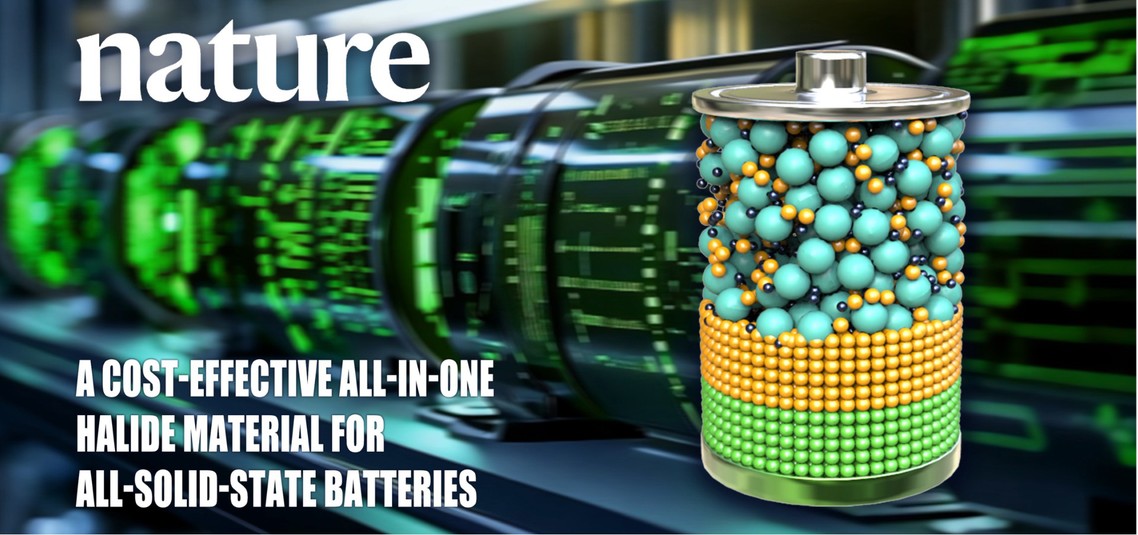
Output of high‑level papers saw substantial growth. A total of 436 papers were published throughout the year, including 1 in Nature, 3 in Science, and 25 in CNS family journals, bringing the cumulative count of high‑level papers to 985. Sustainable Horizons, the university’s first international academic journal, obtained its first Impact Factor of 7.7 and was ranked in JCR Q1 zone, demonstrating its academic influence.
Annual research funding reached 1 billion RMB, with a cumulative total of 3.45 billion RMB, laying a solid foundation for sustained innovation. The capacity of research platforms was significantly enhanced. One new provincial‑level key laboratory and one provincial‑level Proof‑of‑Concept Center were approved, together with two municipal‑level key laboratories and one municipal‑level Proof‑of‑Concept Center. Supported by university‑local cooperation, carriers such as the Ningbo Low‑Altitude Economy Innovation Research Institute were jointly built. In total, 6 provincial‑level platforms and 6 municipal‑level platforms have been granted approval.
Research projects improved in both quantity and quality. Thirty‑nine projects were funded by the National Natural Science Foundation of China, and 30 projects by the Zhejiang Provincial Natural Science Foundation (including 3 Zhejiang Provincial Distinguished Young Scholar projects). Thirty‑six national major projects including the National Key R&D Program and National Science and Technology Major Projects were undertaken.
By constructing a U‑shaped scientific and technological innovation system, the university promotes in‑depth integration of industry, university, research and application. More than 200 cooperation and exchange events were held in the year, 15 enterprises were incubated, and multiple research outputs entered the pilot‑test phase, injecting strong impetus into regional industrial innovation.
Keyword 8: Faculty Team Building
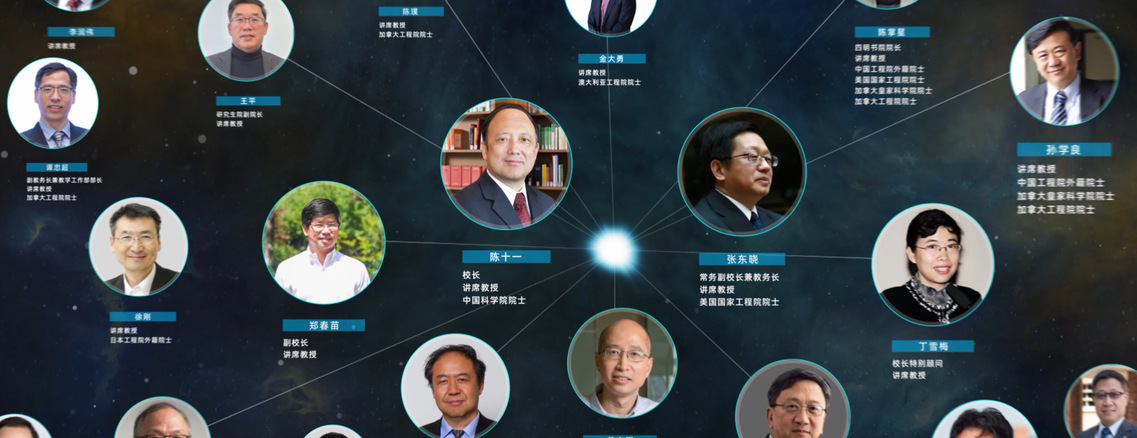
Eastern Institute of Technology has attracted abundant outstanding talents. In 2025, a total of 26 teaching‑research principal investigators (PIs) were recruited.
Committed to global talent recruitment, the university pursues high‑standard talent hiring, international evaluation and appointment, and all‑round support services. By the end of 2025, it had built a high‑caliber, international faculty consisting of 16 academicians, 61 national‑level talents and 101 PIs. Sixty percent of the talents have working experience at the world’s Top‑200 universities, and 95% have overseas study or work experience.
Earlier in the year, the Chinese Chemical Society announced its Fellows of 2024. Chair Professors Zongwei Cai and Xueliang Sun (Foreign Member of the Chinese Academy of Engineering) were selected.
On July 13, Chair Professor Jie Shen received the Frontier Science Award in the field of scientific computing.
In early November, Zhangxing Chen, Member of the National Academy of Engineering of the United States, Foreign Member of the Chinese Academy of Engineering and Chair Professor at EIT, won the Distinguished Scientist Award, one of the three major Science and Technology Awards granted by the Chinese Association for Science and Technology‑USA in 2025.
On December 19, Chair Professor Jie Shen was awarded the First Prize of the Ministry of Education Excellent Scientific Research Achievements Award (Natural Sciences and Engineering Technology).
Keyword 9: International Exchanges and Cooperation
On the global stage, Eastern Institute of Technology is dedicated to telling the Eastern story of China’s higher‑education reform.
In January, the university signed a student‑exchange agreement with the University of Notre Dame in the United States. Leveraging their respective disciplinary strengths and focusing on innovation‑driven fields, the two institutions enable EIT undergraduate students to study at the University of Notre Dame, building a high‑quality overseas development platform for young scholars.
In March, EIT signed an agreement for deepened cooperation with the University of Pisa in Italy. It strengthened ties with top European universities and advanced joint discipline development, injecting new momentum for integrated scientific development between China and Italy.
In April, jointly with the Municipal Education Bureau, the university hosted the China‑Germany (Ningbo) Young Doctoral Forum. Scholars from both countries shared cutting‑edge research findings through keynote presentations, thematic seminars and enterprise‑university site visits, building a trans‑oceanic bridge for academic exchange.
In August, Leiden University of the Netherlands signed agreements with EIT covering undergraduate student exchange and joint doctoral training. Both sides reached consensus on expanding cooperation dimensions and deepening collaborative talent cultivation.
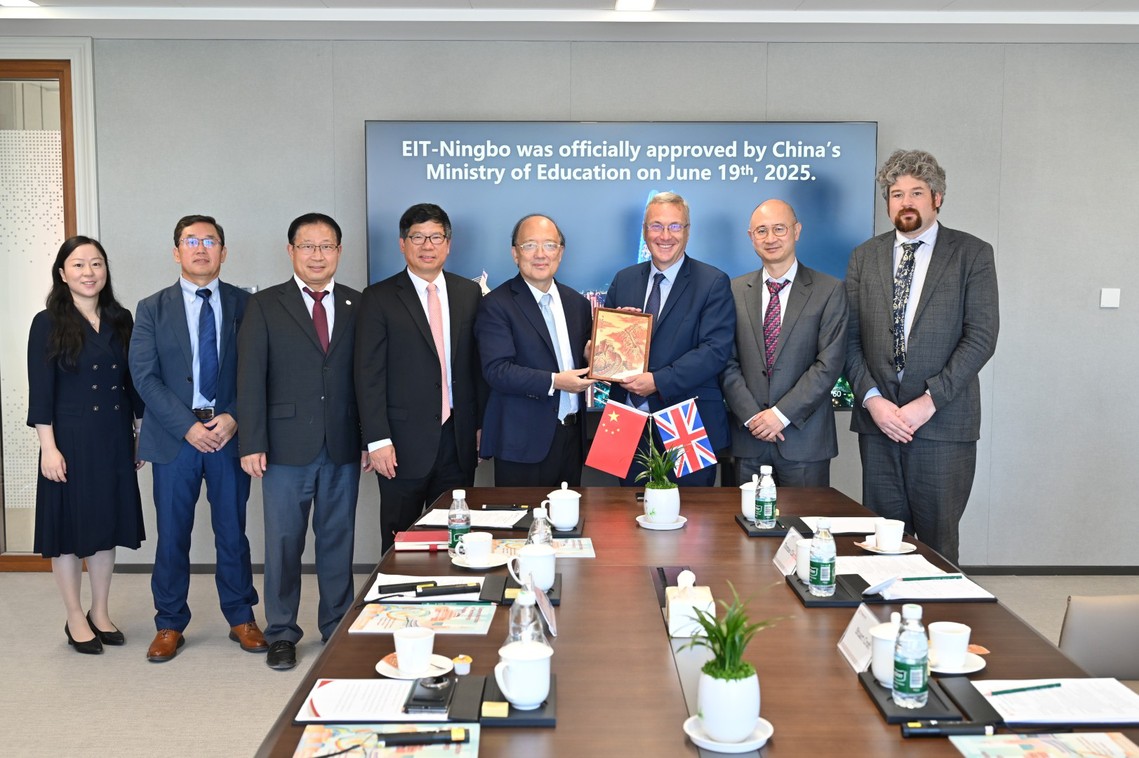
In September, the Vice‑Chancellor of the University of Warwick, UK, visited Eastern Institute of Technology. The two universities have run a joint doctoral training program since 2024. The first cohort of jointly‑trained doctoral students enrolled in the autumn of 2025, marking initial outcomes of the partnership.
In October, EIT signed a strategic cooperation agreement with King Abdullah University of Science and Technology of Saudi Arabia to advance diversified collaboration across interdisciplinary areas such as clean energy. In the same month, Shiyi Chen, President of Eastern Institute of Technology, Ningbo, attended a conference at the National University of Singapore and met with its president to consolidate consensus for further cooperation.
Keyword 10: Social Donations
A wave of donations rooted in devotion to education and hometown‑giving keeps surging at Eastern Institute of Technology.
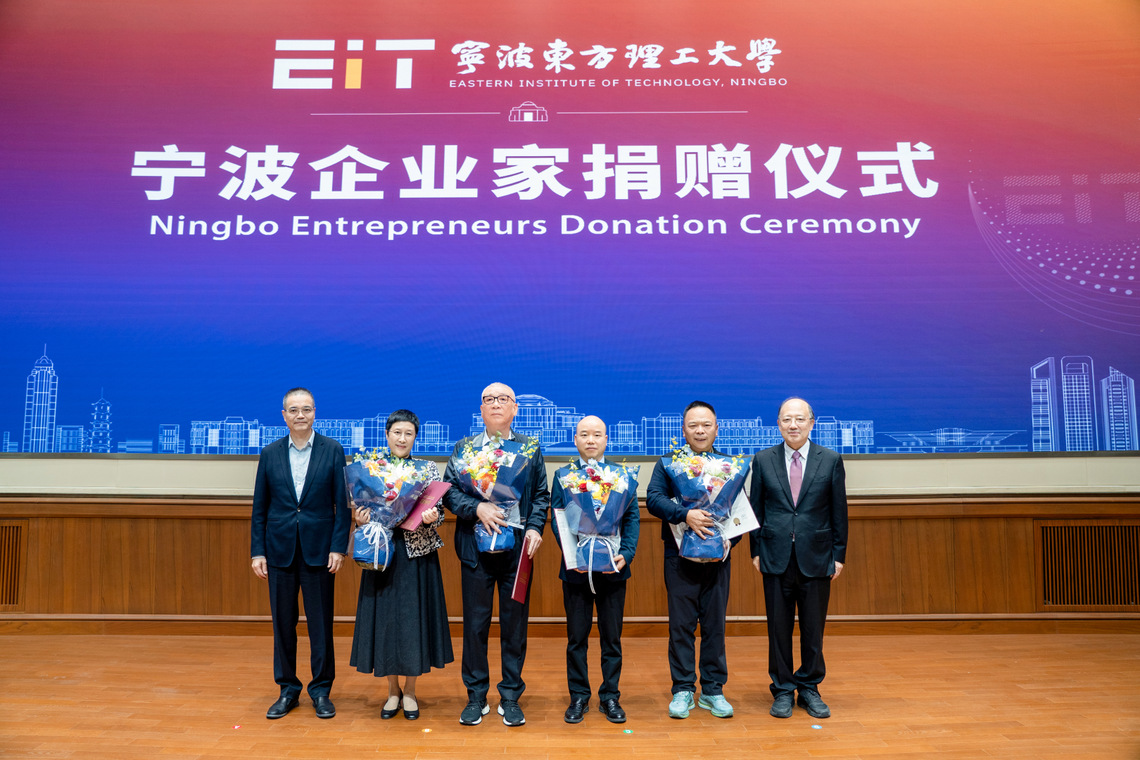
In 2025, the university’s donation program flourished with generous support from distinguished people from all walks of life. In November, the university held a joint donation ceremony to pay tribute to four entrepreneurs: Gong Lihong, Xu Chunyuan, Xu Punang and Ma Jianrong. On the 30th of the same month, the Youngor Library, named after entrepreneur Li Rucheng, was officially unveiled. Apart from the donation from Mr. Yu Renrong, many entrepreneurs including Yang Dayi, Liu Qiang, Jin Hailiang, Cai Huabo and Jiang Weiyue, as well as well‑known enterprises, made substantial donations throughout the year to support the university’s development.
All donated funds will be earmarked for institutional undertakings including discipline development, talent cultivation, scientific‑research innovation and teaching. Today, landmark buildings such as the Zheng Jian‑Gong Lihong Couple Building, the Sunwill Building and the Youngor Library stand tall on campus. Educational platforms and programs including the Chunyuan Beacon Scholarship and the Shenzhou Business School deliver educational benefits in a quiet yet profound way. This public‑welfare donation initiative backed by all sectors of society has injected robust and sustained momentum into the high‑quality development of Eastern Institute of Technology.